You search for your business on Google, but your website is nowhere on the first page. You try different search terms, check your competitors and wonder why their websites appear before yours. You have already spent money on website design and development, so naturally, you want people to find your business online.
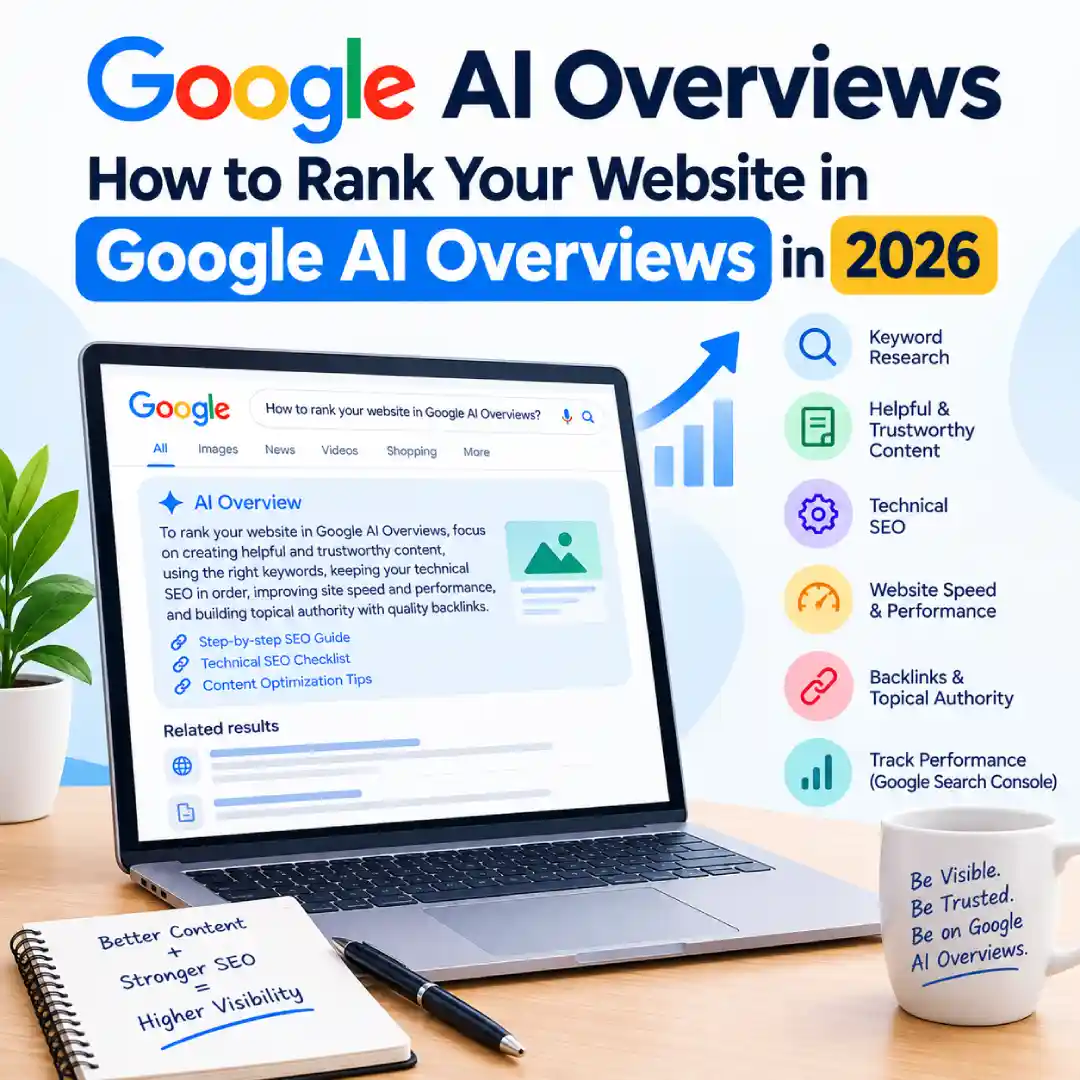
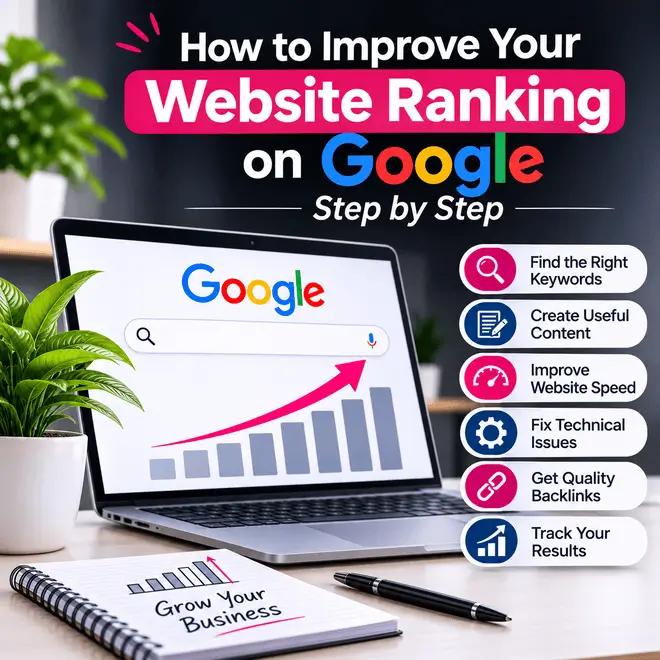
Getting better positions on Google takes more than adding a few keywords to your website. You need to pay attention to all your content, page structure, speed of website and links from other websites. Here are some things you can work on to improve your website ranking in 2026.
1. Find the Keywords Your Customers Use
It is not necessary that whatever name you call your service, customers should also search for it by the same name. Suppose you work on creating websites. Your site might say “web design service,” but a customer might also type “website design company,” “affordable website design,” or “custom website development” into Google.
So how to find out what people are really searching for? Try entering words related to your work in Google Keyword Planner; you will get many new ideas there. Also open Google Search Console. There you can see by which queries people are already using to reach your site.
Keep the purpose of the page in mind when choosing keywords. The service page should be for people who want to purchase that service. The job of a blog is to answer the questions people want to know.
2. Give People a Reason to Read Your Content
Imagine someone comes to your page to find out the cost of building a website, and all they see is "price depends on your needs." In such a situation, he will be stuck there because he still has no idea what to do next or how much budget to keep.
Explain what affects the cost, what features are included and what questions customers should ask before choosing a developer. This gives readers something useful instead of making them search for the same information elsewhere.
The same approach works for blogs. Write about common customer questions, problems and topics related to your business. Use your main keyword, such as improve website ranking on Google, naturally in the content.
3. Check Your Page Titles and Headings
Open some of your important website pages and check whether their titles clearly explain what each page offers.
For example, a page about ecommerce website development should have a title related to that service, not a general heading that could fit any page.
Write a useful meta description, organize information under clear H1 and H2 headings, and use relevant image alt text. Add internal links when another page provides more information about the topic. These on-page SEO changes make your site easier to understand, whether by a visitor or a search engine. The visitor quickly learns whether the page contains something relevant to him or her, and Google understands what the page is about.
4. Fix Slow Loading Pages
A customer opens your website but has to wait several seconds before the main content appears. They may simply close it and visit another business.
Check your website using Google PageSpeed Insights. Large images, unnecessary scripts and poor hosting can slow down your pages. Compress images, remove features you do not need and check your Core Web Vitals, including LCP, INP and CLS.
Also, open your website on a mobile phone. Make sure the text is readable, buttons work properly and visitors can find your contact details without difficulty.
5. Make Sure Google Can Index Your Website
Many times a page is not visible on Google simply because it is not indexed. Open Google Search Console and check the URLs of your important pages. If you notice any indexing issues, double-check your XML sitemap, robots.txt file and canonical tags.
Remember one thing: getting indexed does not guarantee good rankings. You rank only when Google thinks your page is about what people are searching for.
6. Get links from useful websites
Backlinks are links that other websites provide to your site. These help your name reach new people and also increase trust in your site. For example, you could write a useful article for a site in your industry, or get your business listed in the right directories.
Don't get caught up in collecting hundreds of links from sites that have nothing to do with your work. Every link should have meaning, both for your business and for the people visiting that site.
7. Keep an Eye on Your Results
After making changes in SEO, see whether they had any effect or not. Google Search Console shows which pages are getting clicks and impressions, and Google Analytics shows what people do when they visit your site.
If a page is getting good impressions but very few clicks, then understand that people are looking at it but do not feel like opening it. In such a situation, try changing the title of that page. If visitors are not finding the information they need, review the content and make it clearer.
You do not need to change everything every week. Give your updates time and compare results over a reasonable period.
Final Thoughts
A website does not reach the first page of Google simply because it has been published. You need to understand what customers search for, give them useful information and fix problems that make your website difficult to use.
At 3i Planet, we work on website design and development with attention to how businesses present their services online. A well-built website with clear content and proper SEO gives customers a better way to find and understand your business.